
- Home
- EventsEvents
- Product Launches
- CategoriesCategories
- Advertise
- Opinion

India’s leading FMCG group BL Agro announced an infusion of Rs 1,500 crores for its biotech subsidiary Leads Genetics to build a 360-degree circular economy model with integrated genetics and reproductive-technology, which will improve the cattle breeding and eventually the dairy industry of the country. The company is in talks with states such as Uttar Pradesh, Maharashtra, Bihar and Madhya Pradesh to replicate this model in other states. The announcement was made during the two-day Cattle Genomics Summit 2026, held in Bareilly.
The company would be investing in these states to develop an integrated dairy and genetics ecosystem, including an in-house integrated Breed Improvement Farm, IVF–ET Laboratory, Multiple Ovulation Embryo Transfer (MOET), Pathology Laboratory and Genomics Laboratory. This would bring together the complete breed-improvement value chain under one roof. The initiative is part of BL Agro's broader vision for a 360-degree milk value chain spanning genetics, breeding, animal health, nutrition, milk production, processing and market linkages, supported by a farmer extension and outreach programme.
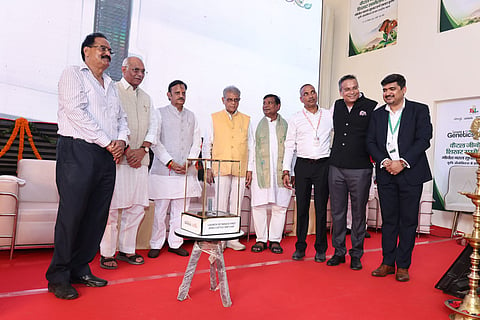
The two-day summit, a first-of-its-kind held by a corporate, brought together genomics, IVF, advanced sequencing, genetic evaluation and data-driven breeding on a single platform, with scientists, breeders, researchers and industry stakeholders in attendance. The event saw participation of Deputy Chief Minister Shri Rajendra Shukla, Madhya Pradesh, Shri Dharampal Singh, Minister of Animal Husbandry, Uttar Pradesh and Shri Shri Arun Kumar Saxena, Minister of State (Independent Charge) for Forest, Environment, Zoology and Climate Change, Uttar Pradesh.
Shri Rajendra Shukla, Deputy Chief Minister, Madhya Pradesh said "Leads Genetics and BL Agro are doing highly commendable work at such a large scale. I truly appreciate the efforts of Dr. Ghanshyam Khandelwal and his companies, BL Agro and Leads Genetics in driving research and innovation in this field. The company’s focus on advancing modern animal genetics, breeding technologies and scientific research in India is a progressive step towards strengthening the country’s dairy and livestock sector. This initiative has the potential to significantly contribute to the country’s development, improve productivity and enhance farmers’ prosperity.”
Commenting on the advancements that were showcased during the event, Shri Dharampal Singh, said, “It is heartening to see India’s progress in agri-tech, particularly with private-sector leadership. While India is the world’s largest milk producer, per-animal productivity remains low and we continue to depend on imported germplasm for high-end genetics. Leads Genetics is helping build genetic self-reliance by producing elite bulls, embryos and sexed semen domestically, while strengthening indigenous breeds. Higher milk productivity can also help reduce methane emissions per litre of milk produced.”
The event coincided with India's hosting of the BRICS Presidency and the 18th BRICS Leaders' Summit, and also marked the arrival of the first Zebu-optimised bovine SNP chip at Leads Genetics and a live demonstration of next-generation sequencing on the Illumina NovaSeq X platform.
Together, these developments reflect the translation of the India-Brazil cattle-genetics partnership, which was formalised through an agreement in Brasília.
The genomic chip enables Leads Genetics to assess an animal's DNA across thousands of genetic markers, supporting more accurate selection through genomic estimated breeding values. Unlike conventional breeding, which improves a herd one generation at a time over decades, the genomic chip technology allows early identification of animals with stronger potential for milk production, fertility, growth, health, heat tolerance and resistance to ticks and parasites, even before conventional progeny data is available. Combined with IVF, embryo transfer and sex-sorted semen, the technology is designed to multiply and disseminate superior genetics considerably faster than conventional methods, working toward cattle populations better adapted to Indian climatic conditions.
Dr Ghanshyam Khandelwal, Chairman, BL Agro, said, “Farmers are at the heart of our 360-degree circular economy model. Better genetics can improve milk productivity, reproductive performance and the long-term value of cattle, while creating additional income opportunities for farmers. The genetically selected cows are expected to produce high-quality milk, with an average yield of 40–60 litres per cow per day. This will improve the income streams of the farmers. We believe our strategic investment into Leads Genetics will help us in capacity building, improving scientific dairy practices and creating employment opportunities for rural youth.”
A delighted Dr Ashish Dubey, Co-founder, Leads Genetics, said, “We are honoured to show the latest technologies that is our endeavour towards building indigenous genomic capability, strengthen tropical cattle breeding. The benefits of advanced genetics from elite animals to farmers and, ultimately, to India's wider livestock population. Genomics allows us to identify genetic potential more accurately and build breeding programmes around measurable traits, rather than relying only on conventional selection. The future of dairy is not only about better nutrition and management but better genetics.”
Dr S.K. Aggarwal, VP Operations, Leads Genetics, said, “The live birth of these genetically selected elite Gir calves is a significant step towards building a stronger indigenous breeding programme. Our focus is to combine advanced genetics with scientific farm management to improve productivity, reproductive performance and the resilience of Indian cattle.”
Dr. Sarvannan Durairaj, Head IVF-MOET, Leads Genetics, said, “Our Centre of Excellence is being built to scale advanced embryo-production technologies and make superior genetics available at a much larger scale. We are targeting production of 15,000 embryos per month by the end of 2027, creating the capacity to accelerate genetic improvement across India’s dairy sector.”
Leads Genetics initiatives are designed at producing elite bulls, embryos and sexed semen domestically at a fraction of import cost. It also conserves and improves India’s own indigenous breeds, rather than displacing them. Ultimately, the objective is not just better genetics for individual animals, but a stronger, more productive and globally competitive Indian dairy sector.
Click HERE to subscribe to our FREE Weekly Newsletter
