
- Home
- EventsEvents
- Product Launches
- CategoriesCategories
- Advertise
- Opinion

The food processing industry stands at a defining moment. Consumer expectations, regulatory pressure, and sustainability targets are all converging to transform how food is made, packaged, and delivered. At the same time, technological innovation by companies like Neologic Engineers is reimagining plant floors and reshaping machinery design.
From advanced digitalization to non-thermal preservation and sustainable packaging, the years ahead promise a new era of processing. This article explores the emerging innovations shaping the industry in 2025 and beyond, and how engineers, manufacturers, and integrators can translate them into practical, future-ready solutions.
Shift towards food processing 4.0
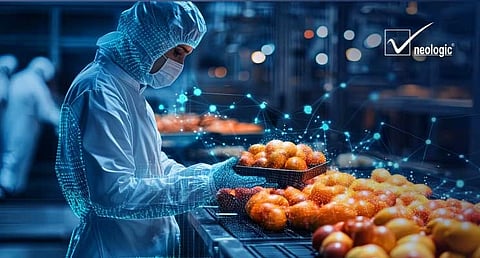
There is a sharp shift happening towards Food processing 4.0. This shift represents the mix of digital tools with sensors, AI & machine learning, and Industrial Internet of Things (IIoT). There has been one significant advancement with terms to inspection with AI-powered vision system. These AI-powered cameras can detect any defects or contamination in the produce with extreme precision and consistency. This eliminates the risk of human error.
Predictive Maintenance is transforming equipment reliability by way of leveraging data from lubrication, temperature sensors, and vibration. It helps the food processors in forecasting any equipment breakdown or failure which in turn helps in reducing the processing downtime. Alongside, closed-loop control systems are ensuring consistent product quality by enabling real-time adjustments to critical parameters like flow rates, temperature, and pH levels. This system helps in minimizing energy consumption and material wastage.
Freshness without heat
Food Processors are opting for non-thermal processing as consumers are increasingly looking for products that are safe, natural, and minimally processed. This has boosted non-thermal preservation methods of food innovation.
High-Pressure Processing (HPP): By subjecting foods to very high pressures, HPP eliminates harmful microbes without heat damage. This extends shelf life while retaining natural color, flavor, and nutrition.
Cold Plasma Technology: Cold plasma uses ionized gas at room temperature to sanitize surfaces, seeds, and even packaging. With low energy use and minimal heat, it acts as a cost-efficient, eco-friendly decontamination tool.
Membrane Separation and Continuous Processing: Membrane technologies including microfiltration, ultrafiltration, and nanofiltration are transforming dairy and beverage lines. These systems are capable of separating, concentrating, and purifying components without the high energy costs of evaporation or distillation. When paired with continuous processing lines, membranes allow for uninterrupted production with higher yields.
RF Technology: Radio Frequency (RF) is the new age technological upgrade in the fruits & vegetables sector. This processing technology is particularly used for applications like drying, disinfestation, and microbial control. RF uses electromagnetic waves to heat products because it enables faster and uniform heating, also reduces processing time while retaining product quality. This helps in effective drying of fruits and vegetables while preserving its texture & nutritional values. In the global markets, it is witnessed that RF technology is being adapted majorly amongst export-oriented facilities.
Use of Robotics and Modular Automation
The role of robotics in food processing is moving far beyond palletizing. Cobots (collaborative robots) equipped with vision systems and soft-grip tools are now being used to:
Handle delicate produce without damage.
Assist with packaging and case packing.
Enable rapid changeovers for multi-SKU production.
Meanwhile, modular line design by food processing equipment manufacturers is becoming increasingly popular instead of rigid. Now, single-purpose lines are where food processors are investing, because of the flexibility & reconfigurable systems are making it easier for them to adapt to the ever-evolving consumer demand. This modularity enhances operational agility as well as supports scalability and long-term cost efficiency.
Sustainable Packaging
Sustainable packaging has become a rising concern of food processors. With strict regulations by the food control authorities and the rising awareness amongst consumers towards sustainability, major innovations are happening within the food processing industry. Innovations like biodegradable and bio-based materials made from agricultural waste are being used as a scalable alternative to conventional plastics. Also, edible films and mono-material packaging are gaining popularity in the processing industry. These packaging options are said to reduce waste and ease the recycling process.
However, to implement such innovative options, food processors must ensure there is close coordination between the packaging design and filling equipment. Also, such processors must consider the compatibility of such solutions with the products shelf life, barrier properties, and overall consumer usability.
Safety, Traceability, and Supply Chain Resilience
Advancements in technology are also redefining how food safety and traceability are managed. Blockchain systems and immutable digital ledgers are enabling real-time tracking of products throughout the supply chain, from farm to fork. This enhanced transparency facilitates faster product recalls, strengthens regulatory compliance, and builds greater consumer trust.
At the same time, artificial intelligence and predictive analytics are being integrated into supply chain operations to improve demand forecasting, reduce waste, and mitigate disruptions. In an environment shaped by climate variability and shifting global trade dynamics, building resilient supply chains is no longer optional; it has become a fundamental requirement for sustained growth and stability.
Designing machinery with flexibility and intelligence
The implications of these industry shifts are particularly significant for machinery and plant design. Modern food processing equipment must go beyond mechanical performance to incorporate digital intelligence and adaptability. This includes integrating built-in sensors for continuous monitoring and validation, as well as adopting modular layouts that allow for easy expansion and reconfiguration as production needs evolve.
Hygienic design principles are also becoming increasingly important, especially in facilities that incorporate advanced robotics and automation. Additionally, machinery must be data-ready, enabling seamless integration with analytics platforms and digital twin technologies for enhanced decision-making and optimization.
These innovations are shaping the food processing industry in ways that are future ready and sustainable. The processors who embrace these changes and adapt to them thoughtfully will gain efficiency and competitiveness along with building a resilient, sustainable food system of the future.
Contact Neologic Engineers
Mail: sales@nepli.net
Phone: +91-8149022514 | +91-8087022514
Click HERE to subscribe to our FREE Weekly Newsletter
